ALS Technology Aids: Stunning Independence Breakthrough
ALS technology aids have emerged as a beacon of hope and innovation, offering individuals living with Amyotrophic Lateral Sclerosis (ALS) the tools and support to reclaim a sense of independence and control over their lives. This progressive neurodegenerative disease affects nerve cells in the brain and spinal cord, leading to loss of muscle control. Yet, through groundbreaking technological advancements, many patients are able to communicate, move, and engage with their environment like never before.
Revolutionizing Communication
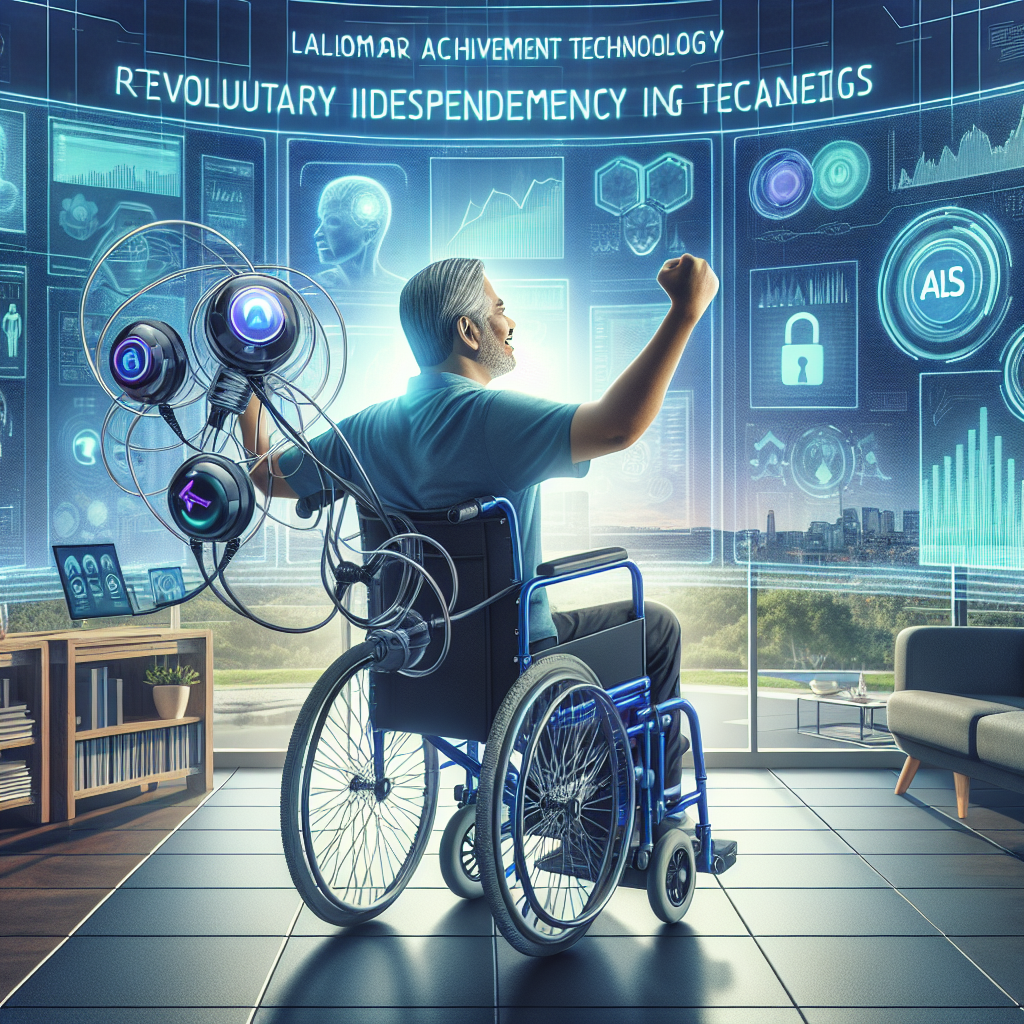
One of the most profound impacts of technological advancements in ALS is in the realm of communication. For many patients, the loss of speech is a significant barrier, cutting them off from social interactions and the ability to express themselves. Enter augmentative and alternative communication (AAC) devices. These tools leverage modern technology to provide patients with the ability to communicate via text or synthesized speech.
Eye-Tracking Technology: A Game Changer
Eye-tracking systems are among the most innovative ALS technology aids enhancing communication. By allowing users to select letters or phrases on a screen with their eye movements, individuals can construct sentences and communicate effectively. These systems are often paired with speech-generating devices which articulate the words on behalf of the user, restoring a vital sense of voice and presence.
Enhancing Mobility and Control
Loss of mobility is a hallmark of ALS, but technology has made extraordinary strides in this area as well. Power wheelchairs equipped with sophisticated control systems cater to patients with varying degrees of muscle function. For instance, joystick-controlled models can be operated with minimal hand movement, while others might use chin controls or even head-tracking technology.
Brain-Computer Interfaces: Bridging Mind and Machine
A truly transformative development in ALS technology aids is the emergence of brain-computer interfaces (BCIs). These devices capture and interpret brain signals, allowing users to control computers or other devices. With practice, individuals can send commands to their wheelchair, communication devices, or even smart home systems. While still in developmental stages, BCIs hold vast potential for enhancing independence and autonomy.
Smart Home Integration
The concept of the smart home presents a plethora of opportunities for ALS patients to retain control over their environment. With voice-activated systems like Amazon Alexa and Google Home, everyday tasks become manageable. Whether it’s adjusting the lighting, controlling the thermostat, or playing music, the ability to manage these functions through voice commands or a mobile device empowers individuals significantly.
Environmental Control Units: Customized Comfort
Supplementing smart home devices are environmental control units (ECUs). These are tailored specifically for individuals with physical limitations, allowing seamless interaction with home electronics. From operating a television to opening doors, these systems provide ALS patients the ability to customize and control their living space, fostering both comfort and independence.
Advancements in Accessibility Software
Beyond hardware, software innovations also play a critical role in enhancing life for ALS patients. Accessibility features, often built into devices, make it easier for these individuals to engage with technology on their terms.
Voice Recognition and Text-to-Speech
Voice recognition software has vastly improved, allowing users to dictate messages, create documents, or execute commands without lifting a finger. Meanwhile, text-to-speech applications offer the chance to hear written content, assisting those with visual impairments or reading difficulties.
Predictive Text and Customizable Interfaces
Predictive text features help streamline communication by suggesting words or phrases based on prior inputs, which can significantly speed up the typing process for those using alternative input methods. Interfaces that are customizable ensure that users can arrange tools and applications in a manner that best suits their needs and preferences.
The Role of Wearable Technology
Wearable technology is another burgeoning field providing tangible benefits to ALS patients. Devices such as smartwatches can monitor health metrics, allowing caregivers and medical professionals to manage symptoms more efficiently. Wearables with GPS functionality also offer a layer of security by enabling location tracking for safety purposes.
Exoskeletons: A Glimpse into the Future
On the horizon are innovations like exoskeletons—wearable devices that support movement and strength. While they’re still largely in experimental phases for ALS patients, there is a growing interest in their potential to offer mobility by providing physical support to weakened limbs.
Conclusion
ALS technology aids are delivering unprecedented levels of independence to those living with this challenging condition. From revolutionizing communication and expanding mobility options to integrating smart home features and improving accessibility through software, technology is fundamentally changing the landscape of ALS care.
As we look to the future, continued research and development hold promise for further empowering individuals and offering hope against ALS’s debilitating effects.
For those seeking support or more information regarding their ALS and Real Water case, please get in touch through the contact page located at “/contact”. Explore more articles on our blog at “/blog”, or call us directly at 702-385-6000.